Biography - Speakers for RamanFest 2014
Raman leaders contributing to this exciting event include:
Dr. Fran Adar  |
HORIBA Scientific |
 Dr. Fran Adar is the Raman Applications Scientist/Manager/Principle Scientist at HORIBA Scientific. With her education and experience in Physics and Biophysics, Dr. Adar has developed applications of the Raman Microscope. Applications are in areas as widespread as semiconductors, ceramics, contaminant identification, polymer morphology, catalysts, metal oxides, pharmaceuticals. She has received awards from the local Microbeam Society (Irene Dion Payne), the Federation of Analytical Chemistry and Spectroscopy Societies (Charles Mann Award), Coblentz Society (William-Wright Award), and delivered an address at the prestigious Waters Symposium at the Pittsburg Conference on the history of the development of Raman instrumentation. In 2012, she was invited to be a fellow of the Society for Applied Spectroscopy. Since 2007, Dr. Adar has been writing a column for Spectroscopy whose goals are to point out where Raman spectroscopy and microscopy are having an impact on evolving technologies, and to guide new users into the field. Dr. Adar continues to work with new and experienced Raman users developing applications, and pushing instrumentation developments to accommodate new applications enabled by evolving technologies. Dr. Fran Adar is the Raman Applications Scientist/Manager/Principle Scientist at HORIBA Scientific. With her education and experience in Physics and Biophysics, Dr. Adar has developed applications of the Raman Microscope. Applications are in areas as widespread as semiconductors, ceramics, contaminant identification, polymer morphology, catalysts, metal oxides, pharmaceuticals. She has received awards from the local Microbeam Society (Irene Dion Payne), the Federation of Analytical Chemistry and Spectroscopy Societies (Charles Mann Award), Coblentz Society (William-Wright Award), and delivered an address at the prestigious Waters Symposium at the Pittsburg Conference on the history of the development of Raman instrumentation. In 2012, she was invited to be a fellow of the Society for Applied Spectroscopy. Since 2007, Dr. Adar has been writing a column for Spectroscopy whose goals are to point out where Raman spectroscopy and microscopy are having an impact on evolving technologies, and to guide new users into the field. Dr. Adar continues to work with new and experienced Raman users developing applications, and pushing instrumentation developments to accommodate new applications enabled by evolving technologies. |
|
| Prof. Sanford A. Asher
|
University of Pittsburgh, Department of Chemistry |
 Prof. Sanford Asher, Distinguished Professor of Chemistry, University of Pittsburgh, received his B.A in Chemistry at the University of Missouri, St. Louis, 1971 and his Ph.D. in Chemistry at the University of California, Berkeley, 1977, and continued as a Research Fellow at Harvard University from 1977-1980. Prof. Asher’s academic career began in 1980 as Assistant Professor in Pitt’s Chemistry department. Prof. Sanford Asher, Distinguished Professor of Chemistry, University of Pittsburgh, received his B.A in Chemistry at the University of Missouri, St. Louis, 1971 and his Ph.D. in Chemistry at the University of California, Berkeley, 1977, and continued as a Research Fellow at Harvard University from 1977-1980. Prof. Asher’s academic career began in 1980 as Assistant Professor in Pitt’s Chemistry department.Dr. Asher’s research at Pitt involves development of new materials and new spectroscopic techniques. His group developed UVRR spectroscopy as a new technique for fundamental and applied structural and trace studies of molecules in complex matrices. The Asher group uses UVRR to examine the first stages in protein folding, while investigating the use of UVRR for detection of explosive molecules, especially stand-off detection. The Asher group develops new photonic crystal optical devices and chemical sensing devices from self-assembling colloidal particles. Dr. Asher pioneered the development of smart hydrogel materials for chemical sensing. He is the recipient of many awards, most recently the 2011 Charles E. Kaufman Award. Others include the 2008 Pittsburgh Spectroscopy Award, the 2002 Ellis R. Lippincott Award, and the 1999 Bomen-Michelson Award. Professor Asher served as Co-Director of Pitt’s Materials Research Center and several scientific advisory boards. Professor Asher consults for PPG Industries, ChemImage Corp., ThermoFisher and is author of 280 publications and inventor of 29 patents in the photonic crystals area. |
|
| Prof. Paul Champion
|
Northeastern University, Physics Department |
 Prof. Paul Champion received his BS in Physics from Iowa State University and his MS and PhD in Physics from the University of Illinois Urbana-Champaign. He did postdoctoral work in the Laboratory of Atomic and Solid State Physics and in the Chemistry Department at Cornell University. Prof. Paul Champion received his BS in Physics from Iowa State University and his MS and PhD in Physics from the University of Illinois Urbana-Champaign. He did postdoctoral work in the Laboratory of Atomic and Solid State Physics and in the Chemistry Department at Cornell University.He was also a NSF-CNRS exchange Fellow at the Institut de Biologie Physico-Chimique in Paris. He is currently Professor of Physics at Northeastern University where he served as Chair of the Department from 1992-2002 and 2010-present. He has also served the American Physical Society as the Biological Physics Divisional Editor for Physical Review Letters (1994-2000), as a member of the Biological Physics Executive Committee (1990-1993), and as Chair of the Biological Physics Prize Committee (2003-2005). He served on the Board of Directors of the Telluride Science Research Center (2006-2008). He is also on the editorial board of the Journal of Raman Spectroscopy and he co-organized the XXII International Conference on Raman Spectroscopy in Boston in 2010. His research interests are focused on advanced spectroscopic methods and their application to molecular biophysics. Most recently he has been involved in the development of ultrafast kinetics and femtosecond coherence spectroscopy as probes of low frequency dynamics in biomolecules. |
|
| Prof. Ji-Xin Cheng
|
Purdue University, Department of Chemistry |
 Ji-Xin Cheng was born in Jixi, Anhui Province, P. R. China in 1971. He attended University of Science and Technology of China (USTC) from 1989 to 1994. From 1994 to 1998, he carried out his PhD study on bond-selective chemistry under the supervision of Qingshi Zhu at USTC. As a graduate student, he worked as a research assistant at Universite Paris-sud (France) and the Hong Kong University of Science and Technology (HKUST). After postdoctoral training in Yijing Yan's group at HKUST and Sunney Xie's group at Harvard University, Cheng joined Purdue University in 2003 as Assistant Professor. He was promoted to Associate Professor in 2009 and Full Professor in 2013 in Weldon School of Biomedical Engineering and Department of Chemistry. His research is at the most forefront of the label-free spectroscopic imaging field. Current projects include the study of aberrant cholesterol metabolism in aggressive cancer and deep tissue imaging by acoustic detection of chemical bond vibration. Ji-Xin Cheng was born in Jixi, Anhui Province, P. R. China in 1971. He attended University of Science and Technology of China (USTC) from 1989 to 1994. From 1994 to 1998, he carried out his PhD study on bond-selective chemistry under the supervision of Qingshi Zhu at USTC. As a graduate student, he worked as a research assistant at Universite Paris-sud (France) and the Hong Kong University of Science and Technology (HKUST). After postdoctoral training in Yijing Yan's group at HKUST and Sunney Xie's group at Harvard University, Cheng joined Purdue University in 2003 as Assistant Professor. He was promoted to Associate Professor in 2009 and Full Professor in 2013 in Weldon School of Biomedical Engineering and Department of Chemistry. His research is at the most forefront of the label-free spectroscopic imaging field. Current projects include the study of aberrant cholesterol metabolism in aggressive cancer and deep tissue imaging by acoustic detection of chemical bond vibration. |
|
| Prof. Igor Chourpa
|
University of Tours, France |
 Prof. Igor Chourpa is Professor of Analytical Chemistry at the Faculty of Pharmacy, Université de Tours François Rabelais, Tours, France, since 1997. He is head of the research team EA 6295 Nanomédicaments et Nanosondes (Nanodrugs & Nanoprobes) he created since 2005. This pluridisciplinary team is specialized in the elaboration, physicochemical characterization and biological evaluation of biocompatible hybrid nanoparticles developed for drug delivery and biomedical imaging (MRI and optical). Prof. Igor Chourpa graduated from Moscow Physical Engineering Institute (Russia) in 1992. Since his PhD obtained in 1996 at the University of Reims (France), Prof. Igor Chourpa is interested in biological application of nanoparticles to deliver anticancer drugs and to study their mechanisms of action. His particular domain of scientific expertise is optical microspectroscopy and spectral imaging based on fluorescence emission and Raman scattering, both conventional and enhanced by means of plasmonic nanoparticles. He is author of 50 publications in international scientific journals and of two book chapters. He directed or co-directed 8 PhD thesis and 4 post-doctoral fellowships. He is acting as referee for national (Agence Nationale pour la Recherche) and international (Synchrotron SOLEIL) calls for proposals as well as for numerous journals (Chem Soc Rev, Small, Adv Matter, The Analyst, J. Phys. Chem., Biomacromolecules, J. Pharm Sci., Pharm Res., Int. J. Mol. Biol,….). He is member of the Editorial Board of ISSRN Spectroscopy. Prof. Chourpa has a long-term experience in coordinating research projects and contracts with public and private organizations. Prof. Igor Chourpa is Professor of Analytical Chemistry at the Faculty of Pharmacy, Université de Tours François Rabelais, Tours, France, since 1997. He is head of the research team EA 6295 Nanomédicaments et Nanosondes (Nanodrugs & Nanoprobes) he created since 2005. This pluridisciplinary team is specialized in the elaboration, physicochemical characterization and biological evaluation of biocompatible hybrid nanoparticles developed for drug delivery and biomedical imaging (MRI and optical). Prof. Igor Chourpa graduated from Moscow Physical Engineering Institute (Russia) in 1992. Since his PhD obtained in 1996 at the University of Reims (France), Prof. Igor Chourpa is interested in biological application of nanoparticles to deliver anticancer drugs and to study their mechanisms of action. His particular domain of scientific expertise is optical microspectroscopy and spectral imaging based on fluorescence emission and Raman scattering, both conventional and enhanced by means of plasmonic nanoparticles. He is author of 50 publications in international scientific journals and of two book chapters. He directed or co-directed 8 PhD thesis and 4 post-doctoral fellowships. He is acting as referee for national (Agence Nationale pour la Recherche) and international (Synchrotron SOLEIL) calls for proposals as well as for numerous journals (Chem Soc Rev, Small, Adv Matter, The Analyst, J. Phys. Chem., Biomacromolecules, J. Pharm Sci., Pharm Res., Int. J. Mol. Biol,….). He is member of the Editorial Board of ISSRN Spectroscopy. Prof. Chourpa has a long-term experience in coordinating research projects and contracts with public and private organizations. |
|
| Dr. Neil Everall
|
Intertek-MSG |
 Neil Everall gained his BSc in Chemistry in 1981 from the University of York, UK, and his PhD in 1986 from the University of Durham, UK, researching ultrafast Raman Spectroscopy for fluorescence rejection. In 1988 he joined ICI plc, where he led the company's Vibrational Spectroscopy activity for more than 13 years and eventually became ICI's senior measurement scientist. He is now employed by Intertek-MSG, where he develops infrared and Raman spectroscopic techniques to solve research, production and application problems for the chemicals, materials and life-science industries. He also carries out fundamental research on vibrational spectroscopy, for example on confocal Raman microscopy and Raman photon migration. He has authored ~90 journal articles and numerous book chapters, he was an Associate Editor of Wiley's "Handbook of Vibrational Spectroscopy", and co-edited Wiley's "Vibrational Spectroscopy of Polymers: Principles and Practice" (2007). Neil Everall gained his BSc in Chemistry in 1981 from the University of York, UK, and his PhD in 1986 from the University of Durham, UK, researching ultrafast Raman Spectroscopy for fluorescence rejection. In 1988 he joined ICI plc, where he led the company's Vibrational Spectroscopy activity for more than 13 years and eventually became ICI's senior measurement scientist. He is now employed by Intertek-MSG, where he develops infrared and Raman spectroscopic techniques to solve research, production and application problems for the chemicals, materials and life-science industries. He also carries out fundamental research on vibrational spectroscopy, for example on confocal Raman microscopy and Raman photon migration. He has authored ~90 journal articles and numerous book chapters, he was an Associate Editor of Wiley's "Handbook of Vibrational Spectroscopy", and co-edited Wiley's "Vibrational Spectroscopy of Polymers: Principles and Practice" (2007).
Neil's research has been recognized by the Society for Applied Spectroscopy Meggers Award (2002 & 2006), the Coblentz Society Williams-Wright Award (2003), and the 2007 Mann Award for Applied Raman Spectroscopy. He is a Fellow of the Royal Society of Chemistry and he was elected a Fellow of the Society of Applied Spectroscopy in 2009. Neil served as European Associate Editor for the journal "Applied Spectroscopy" from 2000-2012. |
|
| Professor Mildred Dresselhaus
|
Massachusetts Institute of Technology, Departments of Electrical Engineering and Physics |
 Mildred Dresselhaus is an Institute Professor at MIT in the departments of Electrical Engineering and Physics. Recent research activities in the Dresselhaus group that have attracted wide attention are in the areas of carbon nanotubes, bismuth nanowires, and low-dimensional thermoelectricity. She is a member of the National Academy of Sciences, the National Academy of Engineering, and has served as Director of the US Department of Energy Office of Science, President of the American Physical Society, Treasurer of the National Academy of Sciences, President of the American Association for the Advancement of Science, chair of the US National Academy Decadal Study of Condensed Matter and Materials Physics, and on many advisory committees and councils. Mildred Dresselhaus is an Institute Professor at MIT in the departments of Electrical Engineering and Physics. Recent research activities in the Dresselhaus group that have attracted wide attention are in the areas of carbon nanotubes, bismuth nanowires, and low-dimensional thermoelectricity. She is a member of the National Academy of Sciences, the National Academy of Engineering, and has served as Director of the US Department of Energy Office of Science, President of the American Physical Society, Treasurer of the National Academy of Sciences, President of the American Association for the Advancement of Science, chair of the US National Academy Decadal Study of Condensed Matter and Materials Physics, and on many advisory committees and councils.
Dr. Dresselhaus has received numerous awards, including the US National Medal of Science, the Fermi Award, the Kavli Award, and 31 honorary doctorates worldwide. She is the co-author of eight books on carbon science and is particularly well known for her work on carbon nanotubes and other nanostructural systems. Her research over the years has covered a wide range of problems in condensed matter and materials physics. |
|
| Prof. Igor K Lednev
|
University at Albany, SUNY, Department of Chemistry |
 Igor K. Lednev is a professor at the University at Albany, State University of New York. He graduated from Moscow Institute of Physics and Technology, Russian Federation, receiving his Ph.D. degree in 1983. Then Prof. Lednev worked at the Institute of Chemical Physics, Russian Academy of Sciences, as a group leader. As an academic visitor, he worked in several leading laboratories around the world including the United Kingdom, Japan, Canada and Germany. In 1997, Prof. Lednev came to the US and joined Prof. Sanford Asher laboratory at the University of Pittsburgh until he moved to the University at Albany in 2002. Prof. Lednev research is focused on the development and application of novel laser spectroscopy for biomedical research and forensic purposes. Prof. Lednev served as an advisory member for the White House Subcommittee on Forensic Science. He is on editorial boards of four scientific journals including Journal of Raman Spectroscopy and Biochimica et Biophysica Acta. Prof. Lednev is a recipient of the Research Innovation Award. He has co-authored over 150 publications in peer-reviewed journals, including 2009 article in Forensics Science International, which is the most downloaded and one of the most cited paper from this top journal in the field. Igor K. Lednev is a professor at the University at Albany, State University of New York. He graduated from Moscow Institute of Physics and Technology, Russian Federation, receiving his Ph.D. degree in 1983. Then Prof. Lednev worked at the Institute of Chemical Physics, Russian Academy of Sciences, as a group leader. As an academic visitor, he worked in several leading laboratories around the world including the United Kingdom, Japan, Canada and Germany. In 1997, Prof. Lednev came to the US and joined Prof. Sanford Asher laboratory at the University of Pittsburgh until he moved to the University at Albany in 2002. Prof. Lednev research is focused on the development and application of novel laser spectroscopy for biomedical research and forensic purposes. Prof. Lednev served as an advisory member for the White House Subcommittee on Forensic Science. He is on editorial boards of four scientific journals including Journal of Raman Spectroscopy and Biochimica et Biophysica Acta. Prof. Lednev is a recipient of the Research Innovation Award. He has co-authored over 150 publications in peer-reviewed journals, including 2009 article in Forensics Science International, which is the most downloaded and one of the most cited paper from this top journal in the field. |
|
| Prof. Wei Min
|
Columbia University, Department of Chemistry |
 Dr. Wei Min graduated from Peking University, China, with a Bachelor's degree in 2003. He received his Ph.D. in Chemistry from Harvard University in 2008 studying single-molecule biophysics with Prof. Sunney Xie. After continuing his postdoctoral work in Xie group, Dr. Min joined the faculty of Department of Chemistry at Columbia University in July of 2010. Dr. Min's current research interests focus on developing novel optical spectroscopy and microscopy technology to address complex problems in biology and medicine. His contribution has been recognized by a number of honors, including Alfred P. Sloan Research Fellowship (2013), NIH Director's New Innovator Award (2012) and Faculty Finalist of Blavatnik Awards for Young Scientists of the New York Academy of Sciences (2012). Dr. Wei Min graduated from Peking University, China, with a Bachelor's degree in 2003. He received his Ph.D. in Chemistry from Harvard University in 2008 studying single-molecule biophysics with Prof. Sunney Xie. After continuing his postdoctoral work in Xie group, Dr. Min joined the faculty of Department of Chemistry at Columbia University in July of 2010. Dr. Min's current research interests focus on developing novel optical spectroscopy and microscopy technology to address complex problems in biology and medicine. His contribution has been recognized by a number of honors, including Alfred P. Sloan Research Fellowship (2013), NIH Director's New Innovator Award (2012) and Faculty Finalist of Blavatnik Awards for Young Scientists of the New York Academy of Sciences (2012). |
|
| Prof. Lukas Novotny
|
ETH Zürich, Switzerland |
 Lukas Novotny is Professor of Photonics at ETH Zürich, Switzerland. He received his PhD in 1996 from the same institution. His doctoral work was in collaboration with the IBM Research Laboratories and dealt with theoretical problems in near-field optics. From 1996-99 he was a postdoctoral fellow at the Pacific Northwest National Laboratory, working on new schemes of single molecule detection and nonlinear spectroscopy. In 1999 he joined the faculty of the Institute of Optics where he started one of the first research programs with focus on nano-optics. Novotny is a co-author of the textbook 'Principles of Nano-Optics', which is currently in its second edition. He is a Fellow of the Optical Society of America and the American Association for the Advancement of Science. Lukas Novotny is Professor of Photonics at ETH Zürich, Switzerland. He received his PhD in 1996 from the same institution. His doctoral work was in collaboration with the IBM Research Laboratories and dealt with theoretical problems in near-field optics. From 1996-99 he was a postdoctoral fellow at the Pacific Northwest National Laboratory, working on new schemes of single molecule detection and nonlinear spectroscopy. In 1999 he joined the faculty of the Institute of Optics where he started one of the first research programs with focus on nano-optics. Novotny is a co-author of the textbook 'Principles of Nano-Optics', which is currently in its second edition. He is a Fellow of the Optical Society of America and the American Association for the Advancement of Science. |
|
| Prof. Christian Pellerin
|
University of Montreal, Canada |
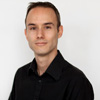 Christian Pellerin is an associate professor at the Department of chemistry of Université de Montréal. He received his B.Sc. in chemistry in 1997 from Université du Québec à Trois-Rivières and his Ph.D. in chemistry in 2002 from Université Laval under the supervision of Michel Pézolet and Robert E. Prud'homme. He joined the faculty at Université de Montréal in 2005 after a postdoctoral fellowship with John F. Rabolt and D. Bruce Chase at the University of Delaware. His research interests include the structure and properties of electrospun nanofibers, molecular glasses, supramolecular polymer complexes, and mussel-based biomaterials, in addition to applying novel infrared and Raman spectroscopy techniques. Christian Pellerin is an associate professor at the Department of chemistry of Université de Montréal. He received his B.Sc. in chemistry in 1997 from Université du Québec à Trois-Rivières and his Ph.D. in chemistry in 2002 from Université Laval under the supervision of Michel Pézolet and Robert E. Prud'homme. He joined the faculty at Université de Montréal in 2005 after a postdoctoral fellowship with John F. Rabolt and D. Bruce Chase at the University of Delaware. His research interests include the structure and properties of electrospun nanofibers, molecular glasses, supramolecular polymer complexes, and mussel-based biomaterials, in addition to applying novel infrared and Raman spectroscopy techniques. |
|
| Dr. Michael J. Pelletier
|
Pfizer Worldwide Research & Development |
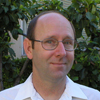 Mike is an Associate Research Fellow in the QbD Methods Development group at Pfizer. His work involves the identification and development of new spectroscopic technologies, applied Raman and NIR spectroscopy, and PAT for process understanding. Prior to that he was a Principle Engineer at NASA's Jet Propulsion Laboratory where he won funding for, and led, in-situ analysis projects involving microfluidics and Raman spectroscopy. He was awarded the Williams Wright Award and the Charles Mann Award for his research in applied spectroscopy. Mike has over 50 peer-reviewed publications (15 single-author) including 6 patents, several book chapters, and a book on Raman spectroscopy. Mike is a Fellow of the Society for Applied Spectroscopy and a Senior Member of the Optical Society of America. Mike is an Associate Research Fellow in the QbD Methods Development group at Pfizer. His work involves the identification and development of new spectroscopic technologies, applied Raman and NIR spectroscopy, and PAT for process understanding. Prior to that he was a Principle Engineer at NASA's Jet Propulsion Laboratory where he won funding for, and led, in-situ analysis projects involving microfluidics and Raman spectroscopy. He was awarded the Williams Wright Award and the Charles Mann Award for his research in applied spectroscopy. Mike has over 50 peer-reviewed publications (15 single-author) including 6 patents, several book chapters, and a book on Raman spectroscopy. Mike is a Fellow of the Society for Applied Spectroscopy and a Senior Member of the Optical Society of America. |
|
| Prof. Ping-Heng Tan
|
Chinese Academy of Sciences, Institute of Semiconductors, P.R. China |
 Ping-Heng Tan received his BS in 1996 from Peking University, and his Ph. D at the University of Chinese Academy of Sciences, 2001. After finishing his Ph.D he became a postdoctoral fellow at the Walter Schottky Institute at the Technical University of Muenchen, Germany. From 2003, he was an associate professor and then professor at the institute of Semiconductors, Chinese Academy of Sciences. He had been awarded as KC Wong Royal Society Fellow to work at University of Cambridge for one year from 2006 to 2007. Tan has authored about 90 peer-reviewed papers in scientific journals with around 2000 citations to his papers and H index 24. He has received 100 national Excellent Doctoral Dissertations Awards, Lu JiaXi Awards for excellent young scientists and National Science Fund for Distinguished Young Scholars. In 2013, he was elected as the Secretary-General of the Professional Committee on Light Scattering of Chinese Physical Society. Ping-Heng Tan received his BS in 1996 from Peking University, and his Ph. D at the University of Chinese Academy of Sciences, 2001. After finishing his Ph.D he became a postdoctoral fellow at the Walter Schottky Institute at the Technical University of Muenchen, Germany. From 2003, he was an associate professor and then professor at the institute of Semiconductors, Chinese Academy of Sciences. He had been awarded as KC Wong Royal Society Fellow to work at University of Cambridge for one year from 2006 to 2007. Tan has authored about 90 peer-reviewed papers in scientific journals with around 2000 citations to his papers and H index 24. He has received 100 national Excellent Doctoral Dissertations Awards, Lu JiaXi Awards for excellent young scientists and National Science Fund for Distinguished Young Scholars. In 2013, he was elected as the Secretary-General of the Professional Committee on Light Scattering of Chinese Physical Society. |
|
| Prof. Sunney Xie
|
Harvard University, Department of Chemistry and Chemical Biology |
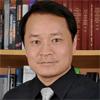 Xiaoliang Sunney Xie received a B.S. from Peking University in 1984, and his Ph.D. from the University of California at San Diego in 1990, followed by a short postdoctoral experience at the University of Chicago.
In 1992, Xie joined Pacific Northwest National Laboratory, where he later became a Chief Scientist. In 1999, he was appointed Professor of Chemistry at Harvard University. He is now the Mallinckrodt Professor of Chemistry and Chemical Biology at Harvard, and the Cheung Kong Visiting Professor at Peking University, Biodynamics Optical Imaging Center (BIOPIC). Xiaoliang Sunney Xie received a B.S. from Peking University in 1984, and his Ph.D. from the University of California at San Diego in 1990, followed by a short postdoctoral experience at the University of Chicago.
In 1992, Xie joined Pacific Northwest National Laboratory, where he later became a Chief Scientist. In 1999, he was appointed Professor of Chemistry at Harvard University. He is now the Mallinckrodt Professor of Chemistry and Chemical Biology at Harvard, and the Cheung Kong Visiting Professor at Peking University, Biodynamics Optical Imaging Center (BIOPIC).
Xie has made major contributions to the emergence of the field of single-molecule biophysical chemistry and its application to biology. His team also pioneered the development of coherent Raman scattering microscopy and single cell whole genome sequencing. His honors include the Harrison Howe Award, Biophysical Society Founders Award, E.O. Lawrence Award in Chemistry, Leibinger Innovation Prize, the NIH Director's Pioneer Award, the Sackler Prize for Physical Sciences. Xie is a fellow of the American Academy of Arts and Sciences and a member of the National Academy of Sciences. |
|
| Prof. Lawrence D. Ziegler
|
Boston University, Department of Chemistry |
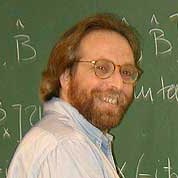 Professor Ziegler received his Ph.D. in Chemistry from Cornell University in 1978 (advisor: A. C. Albrecht) where he carried out Raman experimental and theoretical studies. After an NIH Postdoctoral Fellowship (advisor: Bruce Hudson) at the University of Oregon, and an NRC Research Associateship at NRL, he held appointments of Assistant Professor and Professor in Chemistry at Northeastern University. In 1991 he moved to Boston University where he is currently Professor and Chair of the Chemistry Department and a member of the BU Photonics Center. He pioneered the development of UV resonance Raman, resonance hyper-Raman, and resonance rotational Raman scattering for applications including the study of short-time chemical reaction dynamics. Subsequent research interests include the characterization of ultrafast responses of transparent materials, solvation dynamics in dense fluids and supercritical fluids, ultrafast electronic relaxation in novel semiconducting materials (e.g. carbon nanotubes and WBG semiconductors), and ultrafast IR studies of biological waters. More recently, his lab has explored the use of surface enhanced Raman spectroscopy for bioanalytical applications including rapid infectious disease diagnostics, blood aging, cancer detection and forensics. He was co-Organizer of the 22nd International Conference on Raman Spectroscopy (Boston, August 2010) and is currently Senior Associate Editor for the Journal of Raman Spectroscopy. Professor Ziegler received his Ph.D. in Chemistry from Cornell University in 1978 (advisor: A. C. Albrecht) where he carried out Raman experimental and theoretical studies. After an NIH Postdoctoral Fellowship (advisor: Bruce Hudson) at the University of Oregon, and an NRC Research Associateship at NRL, he held appointments of Assistant Professor and Professor in Chemistry at Northeastern University. In 1991 he moved to Boston University where he is currently Professor and Chair of the Chemistry Department and a member of the BU Photonics Center. He pioneered the development of UV resonance Raman, resonance hyper-Raman, and resonance rotational Raman scattering for applications including the study of short-time chemical reaction dynamics. Subsequent research interests include the characterization of ultrafast responses of transparent materials, solvation dynamics in dense fluids and supercritical fluids, ultrafast electronic relaxation in novel semiconducting materials (e.g. carbon nanotubes and WBG semiconductors), and ultrafast IR studies of biological waters. More recently, his lab has explored the use of surface enhanced Raman spectroscopy for bioanalytical applications including rapid infectious disease diagnostics, blood aging, cancer detection and forensics. He was co-Organizer of the 22nd International Conference on Raman Spectroscopy (Boston, August 2010) and is currently Senior Associate Editor for the Journal of Raman Spectroscopy. |
|
| Dr. The-Quyen Nguyen
|
Northwestern University, Biomedical Engineering Department |
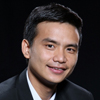 Dr. The-Quyen Nguyen received his Ph.D. in Physical Chemistry from Ecole Central de Paris in 2007. He has developed a new generation of Raman spectrometers using a monochromator, a digital micromirror device as light modulator and a photomultiplier tube as detector. His Ph.D. thesis was recognized with the "Instrument Award" by the French Society of Physics and the French Society of Chemistry, and also received the Medal of the French Academy of Agriculture for excellence. In 2008, Dr. Nguyen went to work for Horiba Jobin-Yvon and then decided to devote his energies to biomedical research and the development of innovative optical instruments for clinical use. He was recently honored with the 2014 SPIE Translational Research Award for his use of Raman spectroscopy in the operating room for surgical margin evaluation. This SPIE award recognizes the outstanding contribution in the field of biomedial optics with the potential to transform clinical practice and improve the lives of patients. Dr. The-Quyen Nguyen received his Ph.D. in Physical Chemistry from Ecole Central de Paris in 2007. He has developed a new generation of Raman spectrometers using a monochromator, a digital micromirror device as light modulator and a photomultiplier tube as detector. His Ph.D. thesis was recognized with the "Instrument Award" by the French Society of Physics and the French Society of Chemistry, and also received the Medal of the French Academy of Agriculture for excellence. In 2008, Dr. Nguyen went to work for Horiba Jobin-Yvon and then decided to devote his energies to biomedical research and the development of innovative optical instruments for clinical use. He was recently honored with the 2014 SPIE Translational Research Award for his use of Raman spectroscopy in the operating room for surgical margin evaluation. This SPIE award recognizes the outstanding contribution in the field of biomedial optics with the potential to transform clinical practice and improve the lives of patients.
Dr. Nguyen is currently a Research Assistant Professor at the Biomedical Engineering Department of Northwestern University, where he develops breakthrough optical spectral and imaging techniques for non-invasive screening, diagnosis and detection of cancers as well as optical instrumentations for large-scale/multi-sites clinical trials. |
|
 and
and