Speakers for RamanFest 2016
Dr. Walter Broeckx  |
Procter & Gamble, Belgium |
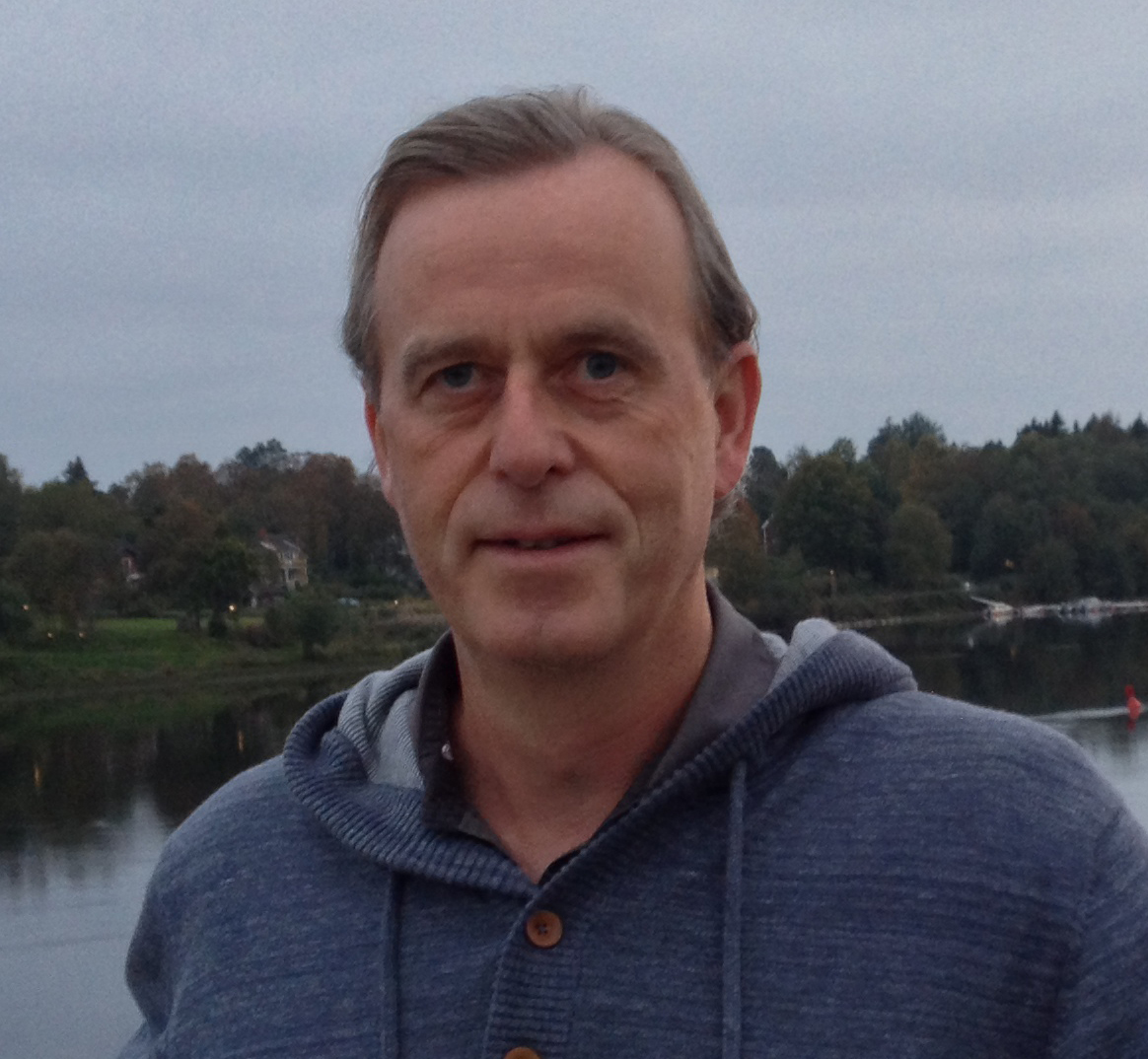
Title: Development of a fast non-destructive Raman Spectroscopic method for accurate quantification of multiple constituents in a liquid detergent.After obtaining his Master of Science in Biochemistry Walter Broeckx joined Procter and Gamble at their Innovation Center in Brussels, Belgium. Currently he's a Technical Section Head in P&G's Global Analytical Organization. In his 28 year career he has had a very broad range of different functions and responsibilities. Amongst them were the design, start-up and management of an Advanced Material Characterization laboratory, and liaison between R&D and P&G's globally scattered manufacturing sites. Today he's heading a Process Analytical Technology (PAT) group, bringing state-of-the art technologies to pilot plant and manufacturing. He's inventor on over 20 patents ranging from cleaning performance enhancers over novel manufacturing processes for encapsulation, to the design of new to the world rheology modifiers broeckx.wa@pg.com |
|
| Prof. Dr. Silke Christiansen
|
Institutsleitung Nanoarchitekturen für die Energieumwandlung Helmholtz-Zentrum für Materialien und Energie Berlin (HZB) , Berlin, Germany |
Title: Correlative Mocroscopy and Spectroscopy workflows for Energy Materials and to advance Bio-medical researchProfessor Silke Christiansen is appointed professor since November 2013 at the Freie University - Berlin and Director of the Institute of Nanoarchitectures for energy conversion at the Helmholtz Center for Materials and Energy, Berlin, Germany. She in addition holds a Group Leader appointment for "Photonic Nanoarchitectures" at the Max-Planck-Institute for the Science of Light, Erlangen, Germany. She has significant experience in the field of nano-materials for energy applications, sensing and opto-electronics. She advances materials based on correlated microscopies and spectroscopies for which she operates a lab@location with Carl Zeiss AG. She gained her scientific experience at various institutions in Germany and the USA, e.g. IBM's T.J. Watson Research Center in Yorktown Heights, NY, USA, Columbia University, NY, USA, Max Planck Institute for Microstructure Physics and the Science of Light in Halle and Erlangen, Leibnitz Institute for Photonic Technology and the Friedrich-Alexander University Erlangen-Nürnberg. She has more than 300 peer-reviewed publications, more than 10 patents/- applications, 5800 scitations and an h-index of 40. |
|
| Prof. Dr. Volker Deckert | Leibniz Institute of Photonic Technology Jena & Abbe-Center of Photonics, Jena University, Germany |
| Prof. Andrea Ferrari
|
Cambridge Graphene Centre, University of Cambridge, UK |
Title: Advances in Raman Spectroscopy of Graphene and Layered MaterialsAndrea C. Ferrari earned a PhD in electrical engineering from Cambridge University, after a Laurea in nuclear engineering from Politecnico di Milano, Italy. He is Professor of Nanotechnology and head of the Nanomaterials and Spectroscopy group at the Department of Engineering and Nanoscience Centre of Cambridge University. He is the founding Director of the Cambridge Graphene Centre and of the EPSRC Centre for Doctoral Training in Graphene Technology. He is the Chair of the Executive Board of the European Graphene Flagship and Leader of the Work-package on Photonic and Optoelectronic Applications. He is Fellow of Pembroke College, Cambridge, Fellow of the American Physical Society, Fellow of the Institute of Physics. His research interests include nanomaterials growth, modelling, characterization, and devices. |
|
| Prof. Heinrich Hoerber
|
University of Bristol, H. H. Wills Physics Laboratory, Bristol, UK |

Title: Nano-photonics and Single Molecule Raman SpectroscopyProf. Hoerber has spent his career working at the physics - life science interface, applying techniques from fundamental physics and developing new instrumentation to understand biological systems. His most significant achievements include: i) the first demonstration of imaging protein structures using scanning tunneling microscopy (STM); ii) the first imaging of living cells using atomic force microscopy (AFM) (visualization of a virus in transit through the cell wall plasma membrane); iii) understanding the structural basis of the elastic properties of single spectrin molecules using AFM force spectroscopy and iv) the invention of the photonic force microscope (PFM), an instrument that utilizes an optical trap instead of the AFM cantilever, capable of imaging in three dimensions withine.g. polymer networks and its subsequent use to demonstrate directly the existence of nanometer sized 'rafts' in membranes of living cell, as well as to analyze the changing mechanical properties of molecular motors within their functional cycle. |
|
| Prof. Dr. Janina Kneipp
|
Department of Chemistry, Humboldt University, Berlin, Germany |
Title: To be confirmedJanina Kneipp received her diploma and doctorate degrees at Freie Universität Berlin. After her dissertation work, completed in 2002 at Robert-Koch Institut Berlin, she was a postdoc at Erasmus Universiteit Rotterdam and at Princeton University, and assistant professor at Humboldt-Universität zu Berlin. Since 2012, she has been continuing her work there as full professor of Physical Chemistry. The focus of her research lies in the development of sensitive vibrational methods for studies of complex microstructured materials and in optical nanospectroscopy. Janina Kneipp is co-founder and speaker of the DFG GSC 1013 School of Analytical Sciences Adlershof (SALSA), a project funded by the German Excellence Initiative. She currently serves as the Head of the Department of Chemistry of Humboldt-Universität. Her awards include the Bunsen-Kirchhoff-Award of GDCh (2010), an ERC Starting Grant (2010), and an honorary Wilhem Ostwald Fellowship at the Federal Institute for Materials Research and Testing (2012). Janina.kneipp@chemie.hu-berlin.de. |
|
| Prof. Ioan Notingher
|
School of Physics and Astronomy, University of Nottingham, UK |
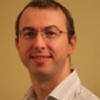
Title: Applications of Raman micro-spectroscopy to imaging live cells and tissues: from cell-cell communication to cancer diagnosisIoan graduated from Babes-Bolyai University Cluj-Napoca (Romania) in 1998, with a BSc (1st class) in Physics. As an undergraduate student, he worked with Professor Mihai Chirtoc at the National Institute for Research and Development of Isotopic and Molecular Technologies on photothermal and photoacoustic spectroscopy. He started his PhD in 1998 at London South Bank University with Professor Bob Imhof (Photophysics Research Group). During his PhD, he developed a new technique for non-contact non-invasive spectral measurements of materials (title "New instruments for thermal emission decay : Fourier transform infrared spectroscopy and applications"). He was awarded the PhD degree in 2001 and moved to Imperial College London as a postdoctoral researcher. He worked with Professor Larry Hench and Professor Dame Julia Polack on developing optical techniques, mainly based on Raman micro-spectroscopy, for label-free characterisation of live cells and tissue engineering constructs. Here, he was co-founder of Nova-Thera, a spin out company exploiting the IP in biophotonics and biomaterials within the Tissue Engineering and Regenerative Medicine Group. In 2004 he moved to Edinburgh University where he worked on near-field optics and spectroscopy. In 2006, Ioan joined as a lecturer the School of Physics and Astronomy at the University of Nottingham, Nanoscience Group. Here, he has established the Biophotonics Group, an interdisciplinary research group working at the Physical and Life sciences interface. He has developed many collaborations with academics, clinicians and industry. He has published more than 50 papers in peer-reviewed journals, and presented more than twenty plenary/keynote and invited lectures at national and international scientific conferences. He is now a Professor of Physics, and was awarded an EPSRC Established Career Fellowship in 2014. | |
| Dr. Anne de Paepe
|
Roche Pharma Research & Early Development, Basel, Switzerland |
Title: Raman Spectroscopy in the Pharmaceutical Industry, 101 applications and counting… |
|
| Prof. Dr. H.C.Jürgen Popp
|
Leibniz Institute of Photonic Technology Jena, Albert-Einstein-Str. 9, D-07745 Jena, Germany and Institute of Physical Chemistry & Abbe-Center of Photonics, Friedrich-Schiller University Jena, Helmholtzweg 4, D-07743 Jena, Germany |
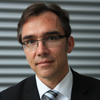
Title: Raman Spectroscopy - the solution to exisiting unmet medical needs!Jürgen Popp holds a chair for Physical Chemistry at the Friedrich-Schiller University Jena. Furthermore, he is the Scientific Director of the Leibniz Institute of Photonic Technology, Jena. His core research focus is biophotonics. Corner stones are the development and application of linear and non-linear Raman-technologies with particular focus on clinical diagnosis. In this context, Raman methods are utilized and developed according to the needs of pathology, oncology, and infection/ sepsis. He has published more than 550 journal papers and has been named as an inventor on 12 patents in the field of spectroscopic instrumentation. He is founding editor and Editor-in-Chief of the Journal of Biophotonics. In 2012, he received an honorary doctoral degree from Babe#015F-Bolyai University in Cluj-Napoca, Romania. Professor Jürgen Popp is the recipient of the 2013 Robert Kellner Lecture Award and in 2016 he will receive the prestigious Pittsburgh Spectroscopy Award. |
|
| Dr. Hervé Rigneault
|
Institut Fresnel, Marseille, France |

Title : Coherent Raman microscopy and endoscopyDr. Hervé Rigneault is full CNRS Research Director and Heads the Mosaic group, Institut Scientific production
|
|
| Dr. Debdulal Roy
|
University of Oxford, National Physical Laboratory, London, UK |
Title: Nanospectroscopy for Structure-Property Correlation at the Nanoscaledebdulal.roy@npl.co.uk. |
|
| Dr. Nikolai Severin
|
Dept of Physics, Humboldt University, Berlin, Germany |
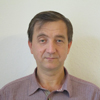
Title: Raman-spectroscopy of a graphene-mica slit pore containing molecularly thin filmsNikolai Severin received his B.Sc. and M.Sc. degrees in Physics from Lomonosov Moscow State University. He obtained his PhD in Physics from Humboldt-Universität zu Berlin in 1999. Since then he has worked in the research group of Prof. Jürgen Rabe, Humboldt-Universität zu Berlin. His researched interests include scanning probe microscopy for characterization of surfaces. He is an author of more than 50 journal papers and seven patents. |
|
| Prof. Abhay Shukla
|
Mineralogy, Materials Physics & Cosmochemistry Institute, Pierre & Marie Curie University, Sorbonne Universities, Paris, France |

Title: Raman Spectroscopy in 2D MaterialsAbhay Shukla is Professor at the University Pierre and Marie Curie in Paris since 2002. He graduated from EPFL, Lausanne and obtained his PhD at the University of Geneva. He was a postdoctoral researcher and subsequently scientist for several years at the European Synchrotron Radiation Facility at Grenoble where he developed and used X-ray inelastic scattering methods for the measurements of electronic momentum distributions, electronic excitations and phonons in solids. At the UPMC he continued the synchrotron spectroscopy work, co-proposing the GALAXIES inelastic scattering beamline at SOLEIL, Saclay and performing experiments at several synchrotrons around the world, notably under extreme conditions. A few years ago he developed research in the domain of two-dimensional materials which are currently his principal interest. His work in this domain revolves around electronic and vibrational properties of these materials and devices and applications related to these properties. He is an elected member of the governing board of the university, has been director of the doctoral school 'Physics and Chemistry of Materials' and is a member of the executive committee of the excellence initiative Labex Matisse. |
|
| Dr. Mark Sparrow
|
RJ Lee Group - Monroeville, PA, USA |

Title: Automated Raman for Particle and Trace Compound AnalysisMark Sparrow is a Project Scientist and Raman spectroscopist with RJ Lee Group in Monroeville, Pennsylvania, USA. He received his MS in Analytical Chemistry and spectroscopy from the University of Pittsburgh while studying protein folding dynamics using UV Resonance Raman spectroscopy. Mark has been employed with RJ Lee Group for 8 years. He has been employed with RJ Lee Group for eight years, researching a wide range of subjects including nanomaterials and their interaction with biological systems, polymers and composites, minerals, coatings, semiconductors, and pharmaceutical formulations. He is a member of the Spectroscopy Society of Pittsburgh, the Society of Analytical Chemists of Pittsburgh, and the Society of Applied Spectroscopy. |
|
| Dr. Renzo Vanna
|
LABION - Fundazione Don Carlo Gnocchi Onlus, Milano, Italy |

Title: Raman and SERS-based approaches for the diagnosis and monitoring of cancer and neurodegenerative diseasesRenzo Vanna received his Master's degree in Biotechnology 2008 and a PhD degree in Molecular Medicine in 2011 focusing his research on brain aging and neurodegeneration. He joined FDG as young researcher starting to collaborate in a project aimed at the development of a new SERS-based biosensor for gene expression for the evaluation of minimal residual disease in acute myeloid leukemia (AML). During this period he spent a period as visiting scientist at University of Twente, The Netherlands, under the supervision of Dr. Cees Otto and Prof. Leon Terstappen (MCBP group), for the development of a new Raman-based methods for label-free cells analysis to ditinguish subtypes of Acute Myeloid Leukemia using Raman microspectroscopy. Currently he is mainly interested in SPRi and is Project Coordinator of "NanoPlasmiRNA", an Euronanomed II - FP7 project mainly focused on the development of new Surface Plasmon Resonance Imaging based methods for the analysis of circulating biomarkers of neurodegeneration. He is author of twelve peer reviewed articles and of several oral presentations at international conferences. |
|
| Dr. H. Kumar Wickramsinghe
|
The Henry Samueli Endowed Chair Professor, Electrical Engineering and Computer Science Professor of Biomedical Engineering Professor of Chemical Engineering and Materials Science University of California, Irvine, CA, USA |

Title: To be confirmedH. Kumar Wickramasinghe is a member of the National Academy of Engineering and respected pioneer in nanotechnology. He is currently Chairman of Electrical Engineering and Computer Science Department and holds the Henry Samueli Endowed Chair Professorship in Electrical Engineering and Computer Science, Biomedical Engineering and Chemical Engineering and Materials Science at UC Irvine. Earning a Ph.D in Electrical Engineering from the University of London in 1974, he joined the Electrical Engineering Department at University College London as a faculty member in 1978. From 1984 to 2006 he was at the IBM Research Division where he held several executive positions including IBM Fellow - the company's highest honor-, Chief Scientist Manufacturing Research, and CTO Science and Technology, IBM Almaden Research Center. He has received several awards including the IEEE Morris E. Leeds Award, 1992, the APS Joseph F. Keithley award, 2000, the Distinguished Corporate Inventor Award, National Inventors Hall of Fame, 1998. MICRO/NANO 25award 2006, the Scientific American 50 award, 2006, Fellow National Academy of Inventors 2013 . Holding over 100 patents, some of his most significant inventions and contributions to the nano field include the development of the vibrating mode atomic force microscope (AFM), the magnetic force microscope, the Kelvin probe force microscope, the scanning thermal microscope, and the apertureless near-field optical microscope (sSNOM) -all these are standard instruments used today for nano-scale characterization. |
|
| Prof. Ingrid de Wolf
|
IMEC (Interuniversity MicroElectronics Centre), Leuven, Belgium |

Mechanical stress measurements in microelectronics systems using Raman spectroscopy: past and present challenges.Ingrid De Wolf received the PhD in Physics from the KU Leuven university, Belgium, in 1989. In the same year she joined IMEC in Belgium, where she worked in the field of microelectronics reliability, with special attention for gate oxide reliability, mechanical stress analysis using micro-Raman spectroscopy and failure analysis using emission microscopy. From 1999 to 2014, she headed the group REMO, where research is focused on reliability, test and modelling of 3D technology, interconnect, MEMS and packaging. She authored or co-authored 14 book chapters and more than 350 publications, and won several best paper awards. She is chief scientist at IMEC, IEEE senior member and professor at the department of Materials Engineering of the KU Leuven where she teaches courses on non-destructive testing, MEMS reliability and failure analysis, characterization techniques and FMEA. Ingrid.DeWolf@imec.be |
|
| Prof. Dietrich R.T. Zahn
|
Technical University, Chemnitz, Physics Department / Semiconductor Physics, Chemnitz, Germany |

Title: High Resolution Raman Spectroscopy of Low Dimensional StructuresProf. Dr. Dr. h.c. Dietrich RT Zahn (born 1958) studied Physics at RWTH Aachen and received a PhD degree in 1988 from the University of Wales in Cardiff. After a post-doc period at the TU Berlin he became Professor for Semiconductor Physics at the Technische Universität Chemnitz in 1993. His research interests focus on the spectroscopic characterisation of semiconductor surfaces, interfaces, ultra-thin films, and low-dimensional structures (> 700 publications). He served as Pro-rector for Research at the Technische Universität Chemnitz and as Head of the Thin Film Division of the German Physical Society (DFG). Currently he is Speaker of the DFG Research Unit FOR 1154 "Towards Molecular Spintronics" and Vice-speaker of the DFG Research Unit FOR 1713 "Sensorical Micro and Nano Systems". Prof. Zahn is Vice-president of the German Vacuum Society (DVG). |
|
| Dr. Alexandros Zachariadis
|
Aristotie University of Thessaloniki, LTFN Nanotechnology Laboratory, Thessaloniki, Greece |
Title: Smartonics on Raman+Ellipso on R2R system for organic PV, OLED |
|